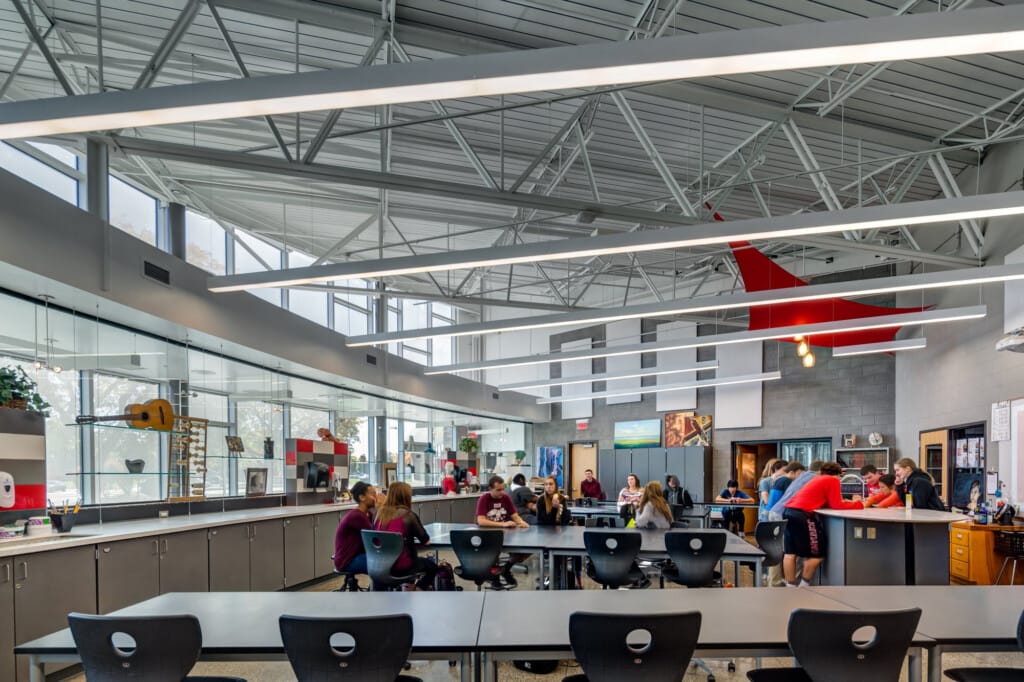
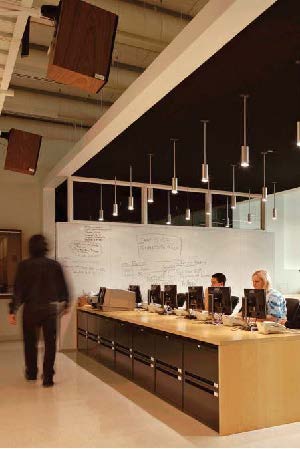
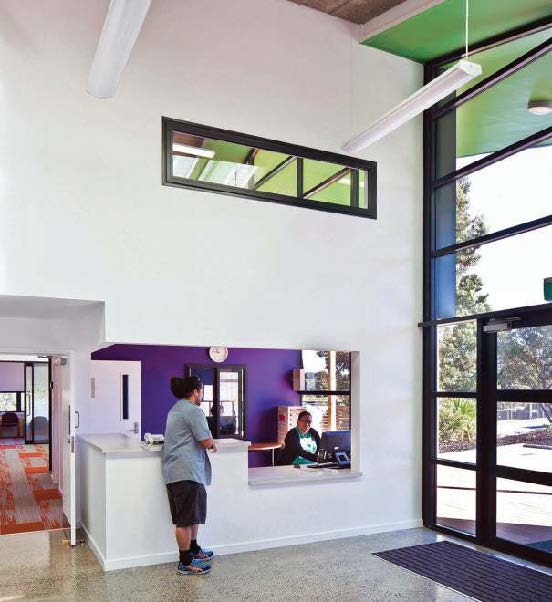
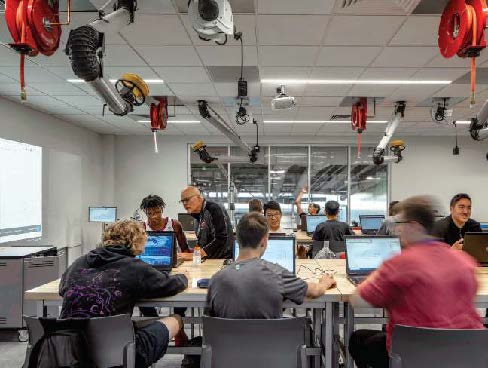
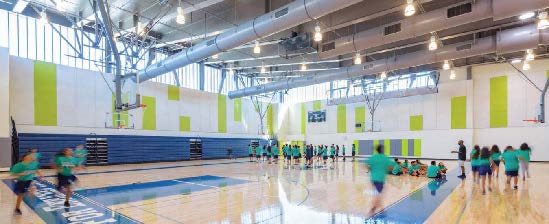
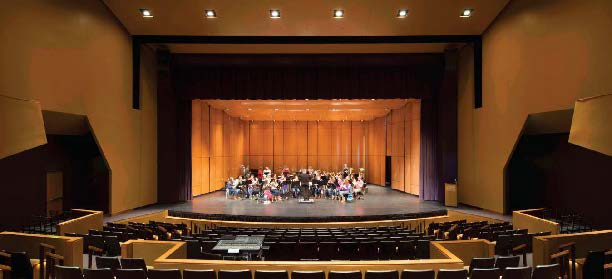
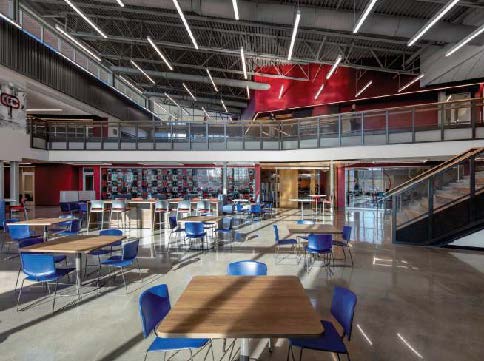
Educational Specifications, otherwise known as "Ed Specs," are intended to be used as design and programming standards to inform school facility construction, renovation, and modernization.
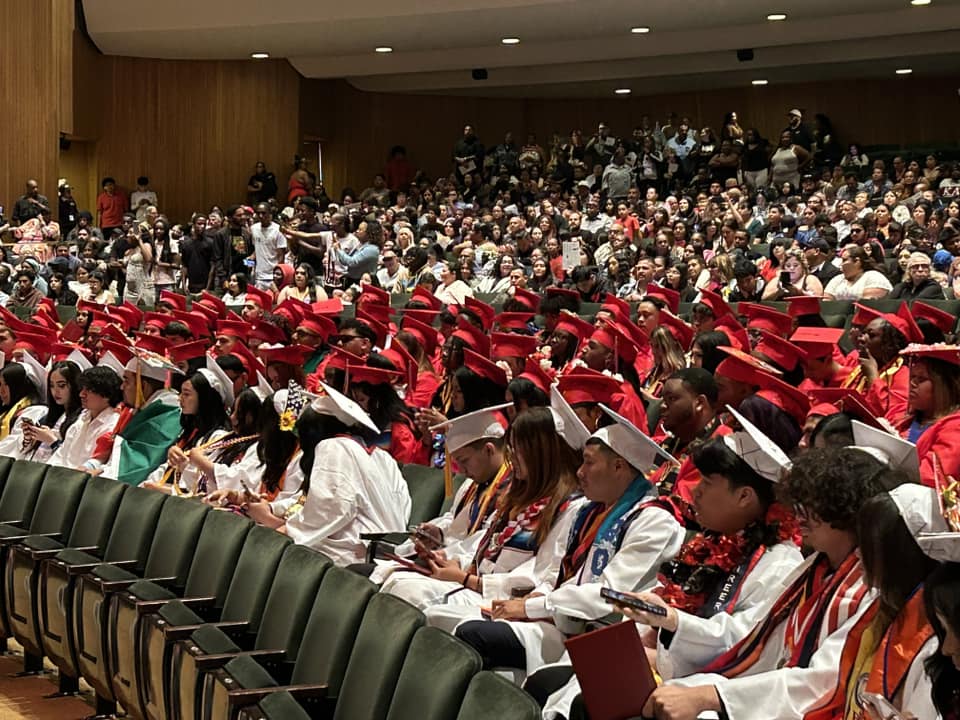
Educational Specifications or Ed Specs are programming standards and planning concepts used by school districts to guide new school construction and major space renovations to create engaging and effective learning environments. The grades K – 8 Ed Specs will serve as the Compton Unified School District (CUSD) guide to the architect and engineering community, providing a path for designers to work with CUSD staff and school communities to define elements of the built environment that will best serve students. They will ensure the development of equitable facilities across the district.
Compton Unified School District is in the south-central region of Los Angeles County, California. CUSD encompasses the city of Compton and portions of the cities of Carsons and Los Angeles. The district currently serves nearly 26,000 students at 36 sites. The mission of the Compton Unified School District is to empower leaders to lead, teachers to teach ands students to learn by fostering an environment that encourages leaders and teachers to be visionary, innovative and accountable for the achievement of all students.
The Compton Unified School District K-8 Educational Specifications outlines the academic vision and programmatic guidelines based on how instruction is delivered today and provides flexibility to embrace changes to educational pedagogy in the future.
While the CUSD Educational Specifications are developed to support a K-8 Program, flexibility has been built within to define the criteria for middle school, K-5, and K-6 programs. An example of a middle school program of spaces has been included within the ed specs as an example. In addition, the content describing the different spaces within a school facility provides further flexibility to support a K-5 and K-6 arrangement.
They are a direct reflection of the CUSD Board of Education’s goals and core beliefs. A fundamental purpose of the development of educational specifications is to ensure equity so that each student can reach their fullest potential.
The information contained within these K-8 Educational Specifications provide a framework for how new schools should be constructed and existing facilities modernized during the next thirty years. While these Educational Specifications are intended to serve as a long-term guide for decision-making, they should be regarded as a living document requiring ongoing review and update to respond to constant changes to educational delivery, practices, strategies, and models.
The Educational Specifications are a guide, and as such, should be applied to each school project in the context of site-specific circumstances and nuances. These Educational Specifications are to be applied district-wide taking into considerations site specific details and factors. Please note that some existing school facilities in their entirety and components thereof may be unable to undergo modifications to meet the standards outlined in these Educational Specifications. In these circumstances, deviations should be explicitly reviewed by CUSD project staff. In some cases, decisions will need to be made on whether a new facility should be constructed.
The Compton Unified School District and Special Education Local Plan Area (SELPA) provide a continuum of support to students with disabilities who reside within the boundaries of Compton. Students become eligible for Special Education services through a formalized evaluation process. Students may be found eligible in one or more of 13 categories per the California Education Code.
The Compton Unified School District Preschool Program is committed to providing a quality educational program that will serve as a bridge to a bright and successful future in school and ultimately in life. At the same time, it aims to provide positive educational experience in a safe, engaging, and active learning environment. The program serves two to four-years-old children. Eligibility for the program is based on documentation and verification of at least one of the following: Income, Current Aid Recipient, Homelessness, Child Protective Services, or At Risk of Abuse Neglect, and/or Exploitation.
The CUSD K-8 Educational Specifications are based on the requirements of the California Department of Education and Title 5 Standards. The most significant of these requirements regarding site design are summarized below.
Below is a list of best practices when renovating campuses to improve drop-off, pick-up, and parking keeping pedestrians safe.
Service areas are crucial to the functions of the campus. Such areas include:
Service areas should be designed for high traffic, heavy equipment, storage and removal of waste and recycling. These areas should be dispersed throughout the campus and be adjacent to the buildings they serve. Because deliveries are typically scheduled for early mornings or in the evening, adequate lighting should be provided to these areas.
One service point should be located at the front of the campus and other service points throughout the campus should be contained to maintain student safety and promote circulation efficiency. Below is a list of guidelines:




Compton Unified School District
Facilities Master Plan


.png)